Electric vs Manual Movable Partition Walls: A Complete Comparison for Space Design
Manual for budget practicality, electric for smart high-end space efficiency.
KEY ADVANTAGES
Geling
7/6/20263 min read
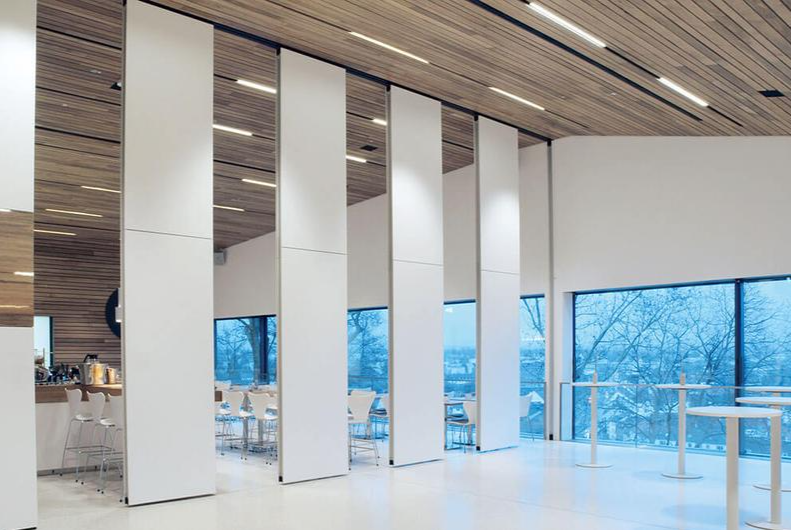
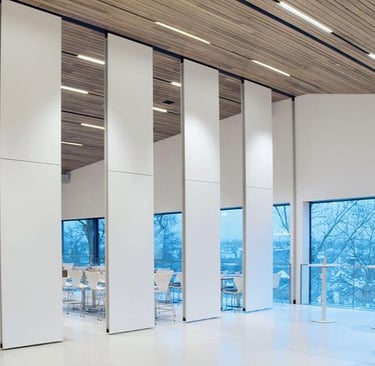
In the interior design of modern commercial spaces, office venues, hotel banquet halls and training institutions, movable partition walls have long replaced traditional fixed walls as an essential solution for flexible space renovation. Without wall demolition or construction, they allow free space division and layout adjustment, greatly improving space utilization and adapting to diverse application needs.
Currently, movable partition walls on the market are mainly divided into two categories: electric intelligent movable partition walls and manual movable partition walls. Many people feel confused when selecting partition solutions for decoration, struggling to distinguish their differences, make appropriate choices and pursue cost-effective results. Below is a comprehensive comparison from three core dimensions — operation experience, working efficiency and spatial texture — to help you pick the most suitable partition wall for your venue without unnecessary costs.
The operating method is the most intuitive difference between the two and directly determines daily usability. Adopting a pure mechanical structure without motors or electronic control components, manual movable partition walls rely entirely on manual pushing, positioning and locking to complete opening, closing and layout adjustment. Featuring simple operation and zero learning cost, a single person can easily move and fix one single wall panel. However, for large-scale multi-panel partition walls, manual operation is time-consuming and labor-intensive, usually requiring multiple workers to cooperate in alignment, locking and sealing. The operation becomes extremely cumbersome if frequent space adjustment is needed. As an upgraded intelligent solution, electric movable partition walls are equipped with built-in silent motors, intelligent electronic control systems and precision tracks, eliminating manual pushing completely. Users only need to press the wall switch or remote control for one-click operation to realize stable expansion, retraction, alignment and sealing locking of wall panels. The whole process runs silently and evenly without manual assistance. Even oversized full-wall partitions can be switched to fully open, fully closed or semi-partitioned states with one click, delivering extremely simple and invisible intelligent control. In addition, the walls are equipped with a manual emergency mode for power failures, ensuring normal use even in unexpected power outages and eliminating all usage concerns.
Space switching efficiency and operational stability are core considerations for commercial space operation, which directly affect venue utilization and customer experience. With a simple structure composed of pulleys, tracks and mechanical locks, manual partition walls are durable with an extremely low failure rate, serving well in low-frequency daily use. Nevertheless, they have obvious drawbacks in efficiency. Multiple wall panels need to be pushed, calibrated and locked one by one manually, and a complete space layout adjustment usually takes several minutes. This solution is competent for venues with fixed layouts and low usage frequency to meet basic demands, yet it is not applicable for high-traffic commercial spaces requiring rapid scene switching, as it will lead to low space turnover efficiency and hinder daily operation. Supported by programmed and precise intelligent control systems, electric partition walls feature standardized operation tracks, uniform opening and closing speed and zero-positioning deviation, requiring no repeated manual calibration. A full space layout switch can be completed in dozens of seconds, greatly boosting space turnover efficiency and perfectly adapting to high-frequency and multi-scene switching demands. Meanwhile, electric partitions fit more closely after closing, delivering better sound insulation, heat insulation and wind resistance performance. They effectively avoid common problems of manual partitions such as large gaps, misalignment and loose sound leakage, maintaining stable performance and superior usage texture in long-term operation.
As both functional space division tools and key elements that determine interior decoration grade, the two types of partition walls differ greatly in appearance and spatial compatibility. Focusing on practicality and cost performance, manual movable partition walls adopt simple and versatile designs with optional glass, wooden and board materials to meet basic aesthetic needs. They are ideal for conventional scenarios such as small and medium-sized offices, casual restaurants and training institutions. Prioritizing practical functions with a low-key and minimalist style, they have no intelligent or high-end design sense, failing to upgrade spatial grade and only fulfilling basic space separation functions. In contrast, electric movable partition walls feature high-end intelligent texture with an integrated embedded design, where tracks and motors are fully hidden inside for a neat and minimalist appearance with no exposed accessories. The smooth automatic opening and closing motion creates a premium technological atmosphere, breaking the dullness of traditional partition walls and effectively enhancing the sense of refinement and professionalism of the space. Suitable for high-end office buildings, star hotels, large banquet halls, business conference halls and other premium commercial spaces, they greatly upgrade the overall grade and brand image of venues.
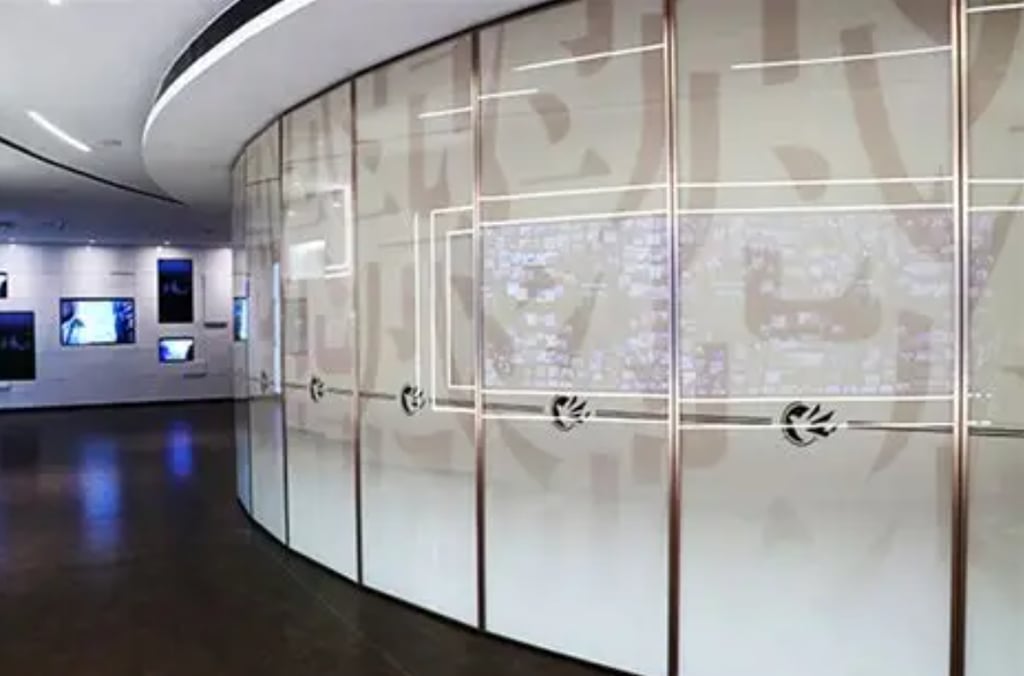
Geling Partition Wall
Innovative Partition Systems for Modern Spaces.
Copyright
© 2025 Guangzhou Geling Decoration Engineering Co.,Ltd All Rights Reserved.
Categories
Movable Partition Wall
Office Glass Partition
Ice and Fire Board
Soundproof Booth
Space Capsule